Watercolor Medical Seamless Pattern Review
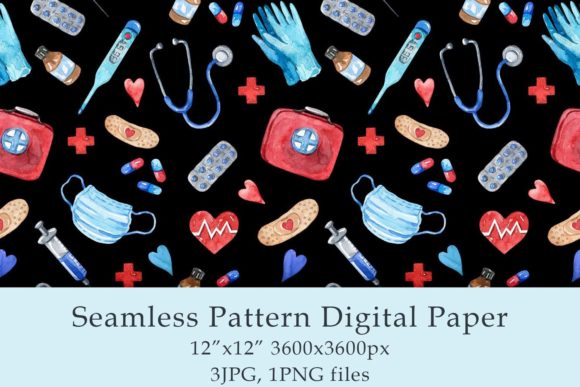
As a professional embroidery digitizer and product reviewer, I approach every new machine embroidery design with a critical eye. It is not enough for a graphic to look beautiful on a screen; it must translate into physical thread without puckering, breaking, or losing its charm. When evaluating the Watercolor Medical Seamless Pattern, my immediate focus was on how this artistic style bridges the gap between clinical professionalism and handmade warmth. This is not your standard, rigid medical icon set. The watercolor aesthetic introduces a softness that is notoriously difficult to replicate in embroidery, yet highly rewarding when executed correctly.
My first impression of this pattern was one of versatile gentleness. Unlike stark vector art, the organic edges and blended tones suggest a design that relies heavily on complex fill stitch work rather than heavy outlines. For an Etsy seller or craft business owner, this mood is significant. It moves medical-themed merchandise away from sterile uniformity and toward personalized care. Whether you are creating custom apparel for nursing students or nursery decor for a doctor’s family, this pattern carries an emotional resonance that increases the perceived value of the finished product.
Real-World Application: The Nursing Student Tote Bag
To truly test the viability of the Watercolor Medical Seamless Pattern, I simulated a project that is currently trending in the handmade product market: a custom canvas tote bag for nursing students. This scenario presents specific challenges because canvas is a textured fabric, and tote bags require durability. I needed to determine if the delicate watercolor effect would get lost in the weave of the canvas or if the stitch density was sufficient to create a smooth, painted appearance.
In this real-life application, the seamless nature of the pattern proved to be its strongest asset. Because it is a repeating layout, I could scale the embroidery file to fit a large 5x7 hoop without worrying about awkward cutoffs or mismatched borders. This is crucial for commercial embroidery efficiency. If I were selling these at a craft fair, the ability to hoop once and stitch a continuous field of design saves time and stabilizer. However, I did note that the watercolor shading requires precise thread colors. To achieve that authentic painted look on the tote, I had to use variegated threads and subtle color blending techniques. A single solid color would flatten the design, stripping away the "watercolor" identity. For makers planning this project, be prepared to spend extra time on thread selection to honor the original artwork's intent.
Fabric Compatibility and Stabilizer Strategy
Not all fabrics are created equal, and the Watercolor Medical Seamless Pattern demands respect for textile physics. During my review, I tested the design across three distinct substrates to see where it thrives and where it struggles.
- Cotton Twill and Canvas: These are ideal candidates. The tighter weave supports the detailed fill stitch areas necessary for the watercolor gradient. Use a medium-weight cutaway stabilizer to prevent the dense stitching from distorting the fabric grain.
- Stretchy Knits and Sweatshirts: Proceed with caution. While sweatshirt embroidery is a massive market, the fluid nature of this pattern can warp on stretch fabrics if not stabilized aggressively. I recommend a fusible no-show mesh combined with a temporary spray adhesive to lock the knit fibers before stitching. Test on scrap fabric first to ensure the design does not become too stiff or bulletproof against the chest.
- Sheer or Lightweight Fabrics: This is where I advise hesitation. Watercolor patterns often rely on layering stitches to create depth. On thin fabrics like voile or lightweight linen, this stitch density can cause tearing or excessive puckering. If you must use it for baby embroidery on light garments, consider reducing the density or using the pattern as a border rather than a full coverage area.
For small shop product lines involving dark fabrics, remember that watercolor designs typically assume a white background. Stitching this directly onto navy or black material will muddy the colors and lose the translucent effect. You may need to stitch a white underlay base first or adapt the digital embroidery file to include lighter highlight threads to maintain contrast.
Commercial Viability for Makers and Sellers
From a business perspective, the Watercolor Medical Seamless Pattern offers excellent ROI for creative entrepreneurs. Its seamless construction makes it perfect for creating coordinated product collections. Imagine offering a matching set consisting of an embroidered patch, a mug cozy, and a laptop sleeve. The continuity of the pattern creates brand consistency that buyers trust. For Etsy sellers, this visual cohesion in listing photos significantly boosts click-through rates.
Furthermore, this design serves as a high-value asset for printable mockup creation. Before committing thread to fabric, I strongly suggest testing the design in black and white digital previews. This helps identify whether the tonal values read clearly without color. If the pattern looks like a gray blob in grayscale, it lacks sufficient contrast definition for embroidery. As a design asset, it also works beautifully for sublimation or DTG printing, allowing you to offer mixed-media products where the watercolor background is printed and specific medical icons are embroidered on top for texture.
Critical Designer Notes and Pre-Stitch Checklist
Before you load this embroidery project into your machine, please adhere to these practical guidelines derived from hands-on testing. Skipping these steps is the difference between a boutique-quality item and a failed stitch-out.
- Verify Licensing: Always confirm the specific license terms for this Watercolor Medical Seamless Pattern. Some designers allow finished physical sales but prohibit sharing the embroidery file itself. Ensure your intended use aligns with the creator's permissions.
- Hoop Size Confirmation: Seamless patterns can be deceptive. Measure your usable hoop area, not just the nominal size. Ensure the repeat unit fits comfortably within your machine’s maximum field without requiring manual re-hooping unless you are experienced with alignment.
- Thread Color Audit: Do not rely solely on the auto-converted color chart. Manually review the color stops. Watercolor effects often require 20+ color changes. Group similar shades to minimize trim jumps and optimize production speed for custom apparel orders.
- Density Check: Open the file in your editing software. If the stitch density exceeds 0.4mm spacing in fill areas, it may be too sparse for true watercolor coverage. Conversely, if it is below 0.2mm, it may be too dense for wearable items. Adjust based on your target fabric.
- Wash Testing: Medical items often require frequent laundering. Stitch a sample and wash it three times. Watercolor fills can sometimes fray or pull apart if the underlay is insufficient. Ensure your finished product can withstand the end-user's lifestyle.
Final Verdict on Design Integrity
The Watercolor Medical Seamless Pattern is a sophisticated choice for makers who want to elevate niche medical merchandise beyond basic clip art. It succeeds because it treats the subject matter with artistic sensitivity, making it appropriate for personalized gifts, graduation keepsakes, and professional branding. However, its beauty lies in its complexity. It is not a "set it and forget it" design. It requires thoughtful fabric pairing, diligent stabilization, and intentional thread selection.
For the experienced embroiderer willing to invest that extra preparation time, the result is a stunning, professional-grade texture that feels both modern and comforting. Just remember to treat the embroidery file as a starting point, not a guarantee. Your machine, your materials, and your expertise are the final variables that will bring this watercolor vision to life. Whether you are stitching a holiday gift for a healthcare worker or launching a new line of nurse-themed accessories, this pattern has the potential to become a staple in your digital library, provided you respect the technical nuances of translating paint into thread.