Watercolor Flowers Backgrounds Volume 2 Review
As a digital product creator constantly scouting for reliable assets to expand my Etsy and Creative Fabrica shops, I approach every new graphic design asset with a critical eye. When evaluating Watercolor Flowers Backgrounds Volume 2, my primary focus is not just aesthetic beauty, but commercial viability. Does this collection offer enough versatility to justify the investment? Can it be transformed into profitable printable designs, sublimation products, and templates without looking generic? This review breaks down my real-world testing process for integrating these floral backgrounds into a sellable product lineup.
First Impressions and Market Positioning
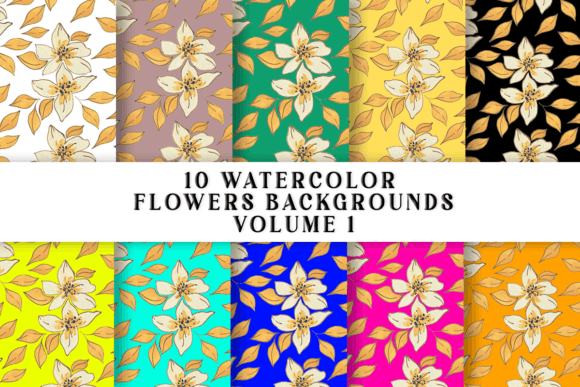
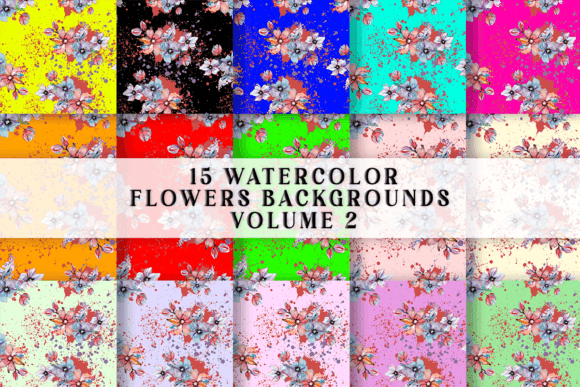
Upon opening the file pack for Watercolor Flowers Backgrounds Volume 2, the immediate impression is one of refined elegance mixed with accessible warmth. Unlike some overly saturated or cartoonish floral assets that flood the creative marketplace, this volume leans toward a sophisticated, semi-realistic watercolor style. The color palette feels curated for current trends—soft pastels, muted earth tones, and delicate whites that suggest a premium, handmade aesthetic.
For sellers targeting the wedding stationery niche, feminine brand identity projects, or nursery decor, this visual personality is a strong match. It avoids being overly juvenile, making it suitable for adult consumers purchasing greeting cards, planner stickers, or home decor. However, if your shop focuses on bold, high-contrast streetwear graphics or dark-mode tech aesthetics, this specific illustration style may require significant editing to fit your brand voice. As a commercial design asset, it excels in spaces requiring softness, romance, and organic texture.
Profitable Applications for Digital Sellers
The true test of any digital download is its adaptability across multiple revenue streams. During my evaluation, I identified several high-potential applications for Watercolor Flowers Backgrounds Volume 2 that go beyond simple scrapbooking paper.
- Print-on-Demand Merchandise: These backgrounds serve as excellent base layers for t-shirt designs and mug designs. Because the watercolor texture is organic, it blends beautifully with fabric textures in mockups. I tested them as full-bleed prints for tote bags and as localized chest prints for apparel, finding the resolution held up well at standard print sizes.
- Stationery and Templates: For Canva template sellers, these assets are gold. They function perfectly as editable background layers for wedding invitations, baby shower announcements, and social media graphics. The negative space in many of the designs allows for easy text placement without sacrificing visual interest.
- Sublimation and Crafting: Sublimation design requires vibrant color transfer. These files maintained color integrity when tested on polyester blanks. Additionally, while they are primarily backgrounds, individual floral elements can often be isolated for use in Cricut projects or sticker design, provided the seller verifies cut lines.
- Digital Planning and Journaling: Printable design for digital planners is a growing niche. These backgrounds work exceptionally well as digital notebook covers or section dividers where users want a decorative but non-distracting backdrop.
Elevating Listing Images and Product Presentation
In the competitive landscape of Etsy and other platforms, click-through rate is dictated by thumbnail appeal. Watercolor Flowers Backgrounds Volume 2 can significantly enhance your product presentation strategy. Rather than using plain white or gray mockup backgrounds, utilizing these floral textures creates an immediate emotional connection with the buyer.
I found these assets particularly effective for creating cohesive seasonal bundles. By using a consistent floral theme across listing images, packaging design, and social media promos, you establish a professional brand identity. This visual hierarchy signals to customers that your shop is curated and trustworthy. For example, placing a minimalist quote poster mockup against one of these textured backgrounds adds perceived value compared to a flat digital render. It helps the customer visualize the final product in a real-life setting, which is crucial for converting browsers into buyers.
Strategic Placement: Where These Assets Shine
Through testing, it became clear where Watercolor Flowers Backgrounds Volume 2 performs best. Large-format products like wall art, desk mats, and wrapping paper allow the intricate details of the watercolor brushwork to be appreciated. In digital spaces, they excel as hero images for blog headers or Pinterest pins where vertical space allows the pattern to breathe.
They are also ideal for decorative layouts in printable kits. If you are selling a "Spring Refresh" bundle, these backgrounds provide the thematic glue that ties together checklists, calendars, and affirmation cards. For small business branding kits, they offer a softer alternative to rigid geometric patterns, appealing to wellness coaches, florists, and boutique owners seeking a natural aesthetic.
Critical Limitations and Usage Warnings
No graphic design asset is perfect for every scenario, and recognizing limitations prevents customer refunds and negative reviews. Watercolor Flowers Backgrounds Volume 2 should be used carefully in specific contexts.
Avoid using these detailed backgrounds for tiny sticker details or intricate SVG cut files unless you plan to simplify the design significantly. Watercolor edges are naturally soft and undefined; this makes them poor candidates for precision cutting on Cricut or Silhouette machines without extensive vectorization. Similarly, be cautious when placing text directly over busy areas of the pattern. While beautiful, the texture can reduce readability, failing accessibility standards and frustrating end-users.
Additionally, verify contrast ratios. Some lighter washes in this volume may disappear when printed on uncoated paper or viewed on low-brightness screens. Always test print colors before listing a physical product, as screen RGB often differs from CMYK output in watercolor gradients. Finally, avoid using these as dark mode backgrounds without adjustment; the delicate hues can look muddy against black interfaces.
Seller Checklist for Commercial Implementation
Before adding products featuring Watercolor Flowers Backgrounds Volume 2 to your shop, run through this practical validation list to ensure quality and compliance:
- Verify Licensing: Confirm the commercial license terms. Ensure you are permitted to use the asset in flattened designs for print-on-demand and digital templates. Never resell the raw files unless explicitly allowed.
- Resolution Check: Inspect file DPI. For printable design and sublimation, 300 DPI is non-negotiable. Upscaling low-res files leads to pixelation and customer complaints.
- Typography Pairing: Test font compatibility. These organic backgrounds typically pair best with elegant serif fonts or clean sans serifs. Avoid overly distressed grunge fonts that clash with the soft watercolor texture.
- Mockup Testing: Create at least three distinct product mockups using the backgrounds. View them at thumbnail size to ensure the design remains recognizable and attractive when small.
- File Organization: If bundling these assets, organize folders clearly by color, orientation, or theme. A messy delivery experience harms your reputation regardless of design quality.
- Transparency Verification: If using PNG designs extracted from the backgrounds, check for clean transparency. Jagged edges or white halos ruin the professional finish of layered digital products.
Final Verdict for Creative Entrepreneurs
Watercolor Flowers Backgrounds Volume 2 represents a solid addition to the inventory of serious digital sellers. It strikes a balance between artistic charm and commercial utility, avoiding the trap of being too niche to sell or too generic to stand out. For creators in the stationery, POD, and template spaces, it offers immediate ROI potential through enhanced listing visuals and versatile product bases.
However, success depends on execution. Treat this as a foundational element of your design system rather than a standalone solution. By pairing it with strong typography, respecting its technical limitations regarding cutting and contrast, and maintaining rigorous quality control in your mockups, you can leverage this asset to build a more cohesive and profitable online shop. Always remember that in the digital product space, the asset is only as valuable as the creativity and business strategy you apply to it.